The management of industrial sludge represents one of the main challenges for companies, both for environmental impact and for the costs related to transportation and disposal. Reducing sludge volumes through dewatering is an effective strategy to optimize operations, lower costs, and reduce the space needed for temporary storage.
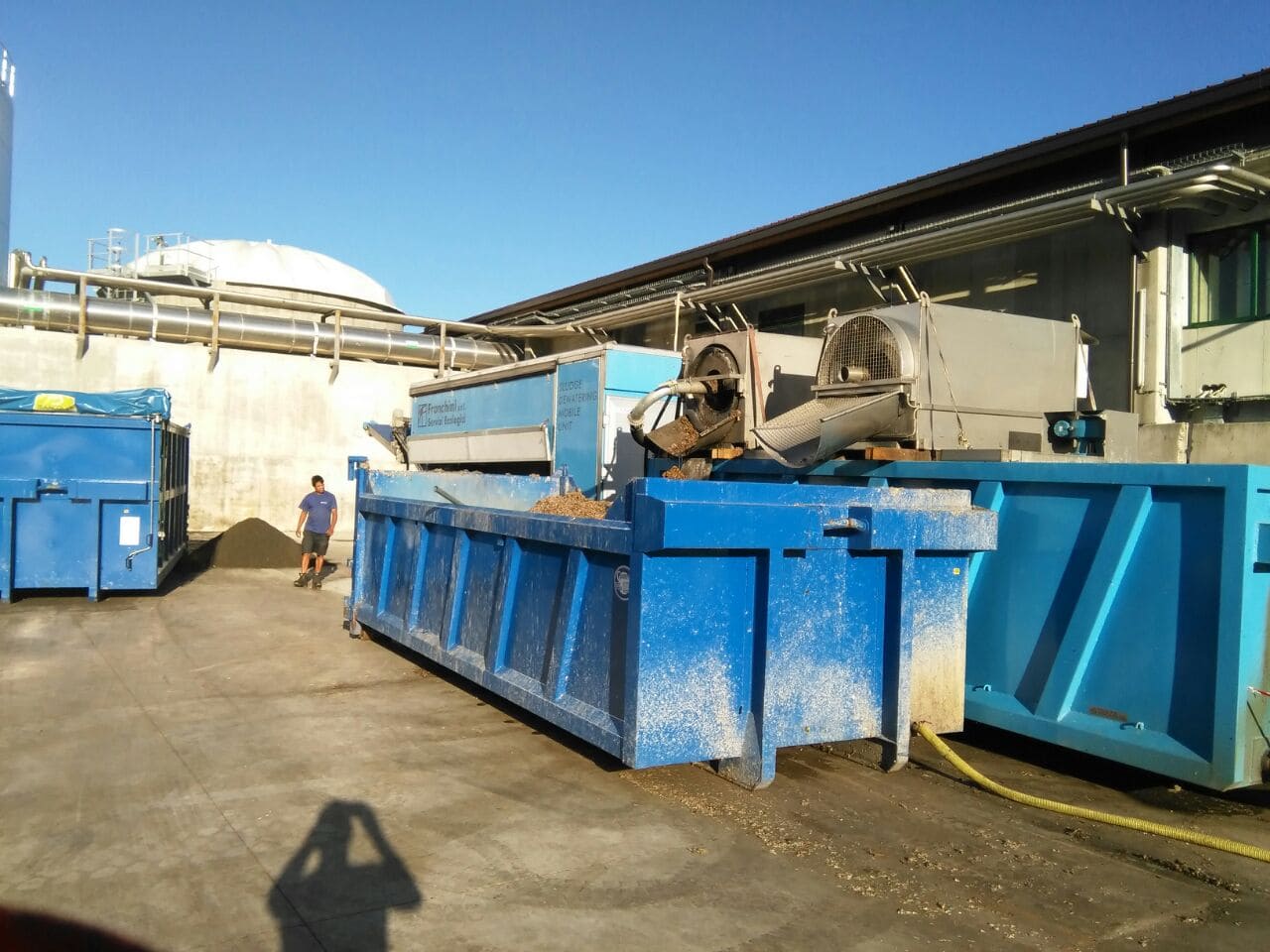
Industrial sludge originates from production processes and wastewater treatment. These materials have a high water content, variable composition, and potential environmental impact. Understanding their characteristics is essential for efficient and safe management, as some properties influence the choice of dewatering technology:
Inefficient sludge management can lead to significant consequences, such as increased transport and disposal costs, greater space occupation in temporary storage, and possible regulatory sanctions, affecting both finances and corporate reputation.
Dewatering separates water from solids, transforming highly fluid sludge into more compact and manageable material. The main benefits include:
Dewatering can be performed using various technologies, selected based on sludge characteristics and operational needs. The main solutions include:
The management of industrial sludge, including dewatering, is regulated by Legislative Decree 152/2006. It is essential to classify sludge correctly using the appropriate CER code, ensure traceability through the Waste Identification Form (FIR), and entrust disposal only to authorized operators.
The producing company remains responsible until final disposal. Non-compliance may result in administrative or criminal penalties, making it essential to use suitable technologies and complete documentation to reduce risks and costs and ensure compliance.
Dewatering industrial sludge is a key tool for companies looking to optimize waste management, reduce costs and volumes, and ensure more sustainable operations. Targeted interventions performed by Franchini Servizi Ecologici professionals produce more compact sludge, easy to dispose of, compliant with regulations, and cost-effective, improving operational efficiency while reducing overall environmental impact.
Sludge dewatering is the process of reducing the water content in industrial sludge, transforming it into more compact, easier-to-transport and dispose material.
Dewatering reduces volume and weight, lowering transport costs, storage space, and simplifying waste management while remaining compliant with regulations.
Main technologies include centrifuges, belt or filter presses, thermal drying, and chemical aids to improve water-solid separation. The choice depends on sludge characteristics and company needs.
Only specialized and authorized companies can carry out dewatering, ensuring safety, efficiency, and compliance with applicable regulations.
By reducing water content, sludge becomes more compact and requires fewer transport trips and less storage space, resulting in significant cost savings.
No, dewatering does not change the hazard classification of sludge. Materials must still be classified and disposed of according to the CER code and regulations.