Industrial tank rehabilitation is a key activity to ensure the efficiency and safety of production and treatment systems. Over time, tanks may be affected by wear, corrosion, sediment buildup, or structural deterioration that compromise their functionality.
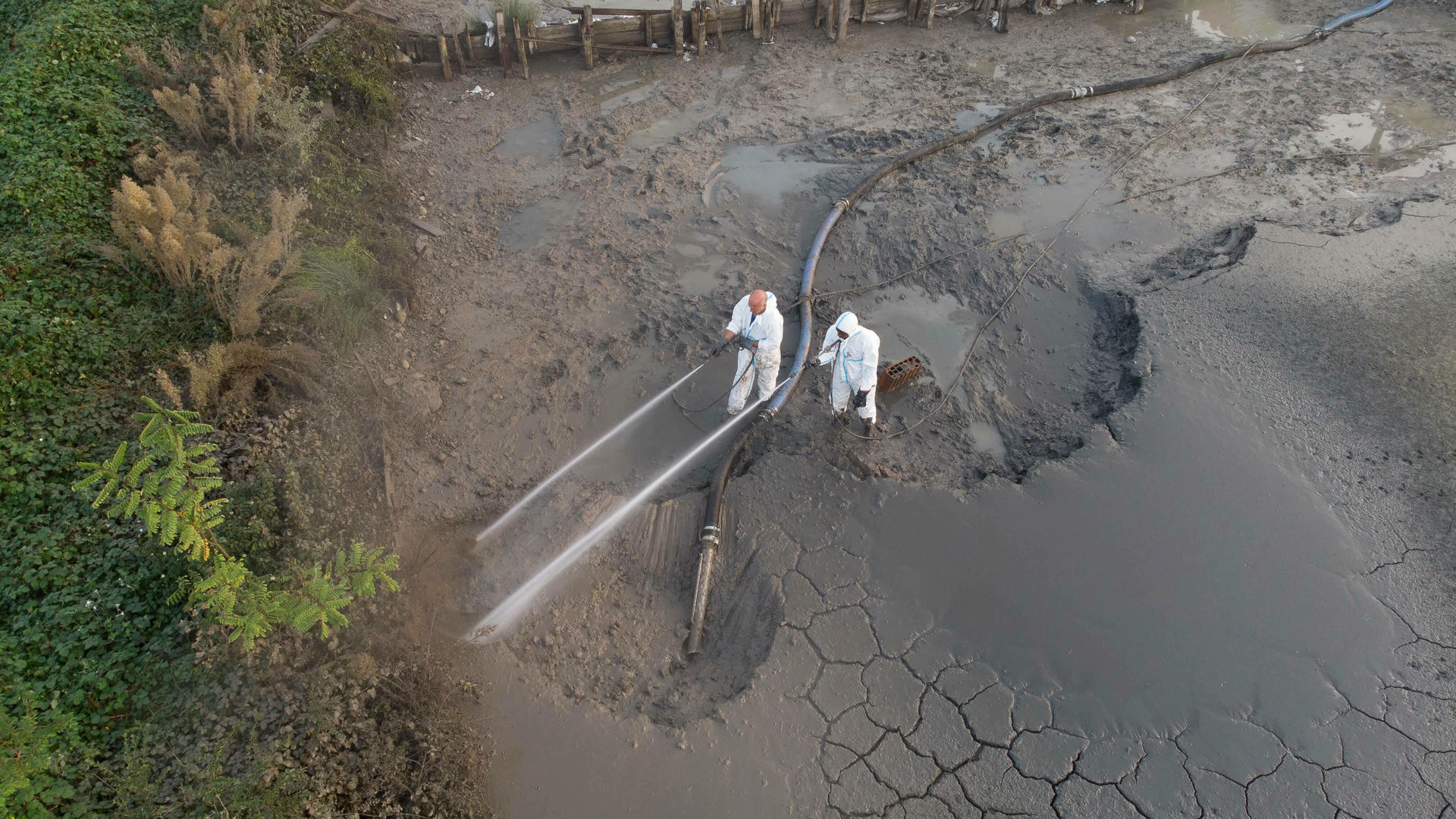
Industrial tank rehabilitation includes all technical operations aimed at restoring the functional and structural integrity of tanks used in industrial, chemical, or wastewater treatment processes.
These interventions may include:
The goal is to restore full efficiency of both the containment system and the related process.
Industrial tanks are exposed to continuous stress that gradually affects performance.
Main causes of degradation include:
If not properly addressed, these factors can reduce operational capacity and increase the risk of failures or contamination.
Rehabilitation can be performed using different technologies depending on tank conditions and system requirements.
Main solutions include:
These methods allow targeted interventions while minimizing downtime.
One of the key advantages of modern rehabilitation is the ability to operate without stopping production.
With advanced technologies it is possible to:
This approach is particularly valuable in continuous or high-intensity production environments.
Compared to demolition and reconstruction, industrial tank rehabilitation is a more efficient and sustainable solution.
Main advantages include:
In many cases, rehabilitation restores near-new conditions with significantly lower investment.
Rehabilitation interventions are used across several industrial sectors:
Each intervention is designed according to specific operational conditions.
Industrial tank rehabilitation is a strategic solution to ensure operational continuity, safety, and long-term performance.
Franchini Servizi Ecologici provides advanced technologies and specialized personnel, delivering tailored solutions for restoring industrial tanks without interrupting production processes.
It is a set of interventions aimed at restoring tank functionality and safety without full replacement.
Yes, in many cases non-invasive technologies allow in-service interventions.
Corrosion, deposits, sludge buildup, and structural deterioration.
When performance decreases or operational risks increase.
In most cases it is faster and more cost-effective than replacement.