The importance of tank remediation
Proper remediation of tanks and cisterns is crucial to:
- Prevent environmental pollution: fuel residues or other harmful substances can corrode tank walls and cause leaks into soil and groundwater. Remediation removes these residues before damage occurs.
- Protect health and safety: stored liquids are often toxic and/or flammable. Cleaning eliminates hazardous vapors, reducing fire, explosion, and exposure risks.
- Ensure worker safety: working inside tanks requires specific safety measures. Proper remediation allows safe intervention.
- Ensure legal compliance: regulations impose strict rules for managing tanks containing hazardous substances. Non-compliance may lead to administrative and criminal penalties.
Regulations governing underground tank remediation
In Italy, the management of decommissioned underground tanks is regulated by specific legislation, including:
- Legislative Decree 152/2006 – Environmental Code
- Regional regulations and municipal rules
- Local environmental agency (ARPA) guidelines
The law establishes key requirements:
- A decommissioned tank cannot remain inactive without intervention
- Soil and groundwater contamination must be prevented
- The owner is responsible for safety measures and remediation
Main remediation phases
The remediation process involves precise steps:
- Gas-free verification: ensures absence of flammable or explosive vapors.
- Opening and ventilation: access and forced ventilation using anti-spark equipment.
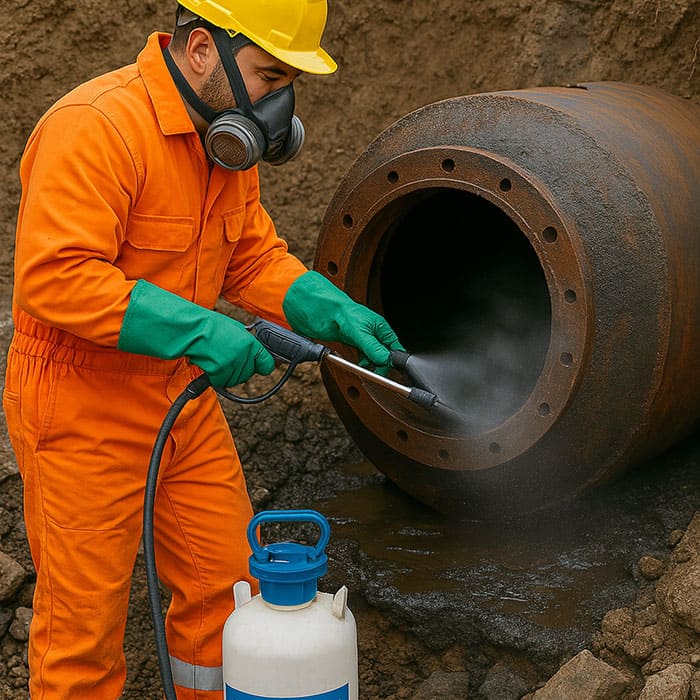
- Suction and cleaning: removal of liquids and sludge, followed by high-pressure washing.
- Waste management: disposal through authorized facilities.
- Removal or inerting: the tank is either removed or filled with inert materials (sand, foam).
- Final certification: official documentation confirming proper remediation and disposal
When remediation is mandatory
Remediation is required when:
- The tank is no longer in use
- Leaks or contamination are detected or suspected
- The system is outdated or non-compliant
- Demolition or renovation works are planned
Failure to comply leads to legal risks and penalties.
Why timely intervention matters
An untreated underground tank may cause:
- Soil and groundwater contamination
- Fire or explosion hazards
- Legal consequences and financial penalties
Acting promptly protects the environment, people’s health, and property value.
Conclusion
Relying on Franchini Servizi Ecologici for underground tank remediation means choosing safety, expertise, and full regulatory compliance. Our qualified technicians manage every phase, ensuring safe, fast, and environmentally responsible interventions.
FAQ
When it is no longer in use, leaking, or non-compliant.
No, inerting is also allowed if safety is ensured.
It depends on size, content, accessibility, and chosen method.
Yes, it proves compliance and proper waste management.
Only authorized and specialized environmental remediation companies.
SOURCES AND REGULATIONS
LEGISLATIVE DECREE 3 April 2006 – Environmental Regulations (Official Gazette General Series No. 88 of 14-04-2006 – Ordinary Supplement No. 96):
Author: Gazzetta ufficiale
Publisher: Gazzetta ufficiale della Repubblica Italiana